
Different Types of Egg Boiling – Complete Guide (Time, Temperature, Health Benefits)🥚

Eggs are one of the most nutritious, affordable, and versatile foods you can include in your daily diet. They are widely considered a “complete food” because they contain high-quality protein, healthy fats, vitamins, and essential minerals that support overall health, energy, and body function.
What makes eggs truly unique is how changing the cooking time and temperature can completely transform their texture, taste, and how your body digests them. The same egg can feel light and delicate when soft-boiled, balanced and creamy when medium-boiled, or firm and filling when hard-boiled. This simple variation in cooking method creates entirely different eating experiences and nutritional benefits.
From a soft, creamy yolk that gently flows on the plate to a firm, fully cooked center that is easy to store and carry, each type of boiled egg offers its own advantages depending on your health goals and meal timing. Some are better suited for breakfast energy, while others work best for post-workout recovery or weight management diets.
Understanding the relationship between heat, timing, and nutrition allows you to make smarter food choices and select the right type of egg for different meals throughout the day. This knowledge not only improves your cooking but also helps you get the maximum nutritional value from one of nature’s simplest superfoods.
Soft-Boiled Eggs
Soft-boiled eggs are cooked gently at around 90–95°C for 5 to 7 minutes, allowing the white to set while keeping the yolk smooth and runny. This light cooking method preserves delicate nutrients and makes the egg easier to digest.
From a health perspective, soft-boiled eggs provide quick energy and are rich in healthy fats, vitamin D, and choline, which support brain function. They are best eaten in the morning for breakfast as they are light and easy to digest.

Medium-Boiled Eggs (Jammy Eggs)
Medium-boiled eggs are cooked at around 95–100°C for 7 to 9 minutes, resulting in a fully set white and a thick, jam-like yolk. This creates a perfect balance between softness and firmness.
These eggs keep you full for longer and are ideal for lunch meals like salads, rice bowls, or sandwiches, providing steady energy throughout the day.

Hard-Boiled Eggs
Hard-boiled eggs are cooked at 100°C for about 10 to 12 minutes until both the white and yolk become fully firm. This makes them perfect for storage and meal prep.
They are an excellent source of protein, supporting muscle recovery and long-lasting energy. Best consumed during lunch, post-workout, or as an evening snack.

Simmered Eggs
Simmered eggs are cooked in water maintained at 85–95°C, avoiding a strong boil. Cooking time ranges from 6 to 12 minutes depending on texture preference.
This gentle method ensures even cooking, reduces cracking, and makes eggs easier to digest, suitable for any time of the day.

Steam-Boiled Eggs
Steam-boiled eggs are cooked using steam at close to 100°C for 6 to 12 minutes. This method ensures even heat distribution and easy peeling.
They retain nutrients well and are ideal for busy mornings or meal prep.

Slow-Cooked Eggs (Chef Style)
Slow-cooked eggs are prepared at 63–70°C for 20 to 30 minutes. This low-temperature method creates a creamy yolk and soft-set white with a luxurious texture.
They are rich, gentle on digestion, and best enjoyed during breakfast or brunch.

Quick Comparison Table 🥗
| Type | Temperature | Time | Yolk Texture | Best Time to Eat |
|---|---|---|---|---|
| Soft-Boiled | 90–95°C | 5–7 min | Runny | Breakfast |
| Medium-Boiled | 95–100°C | 7–9 min | Jammy | Lunch |
| Hard-Boiled | 100°C | 10–12 min | Solid | Snack / Post-workout |
| Simmered | 85–95°C | 6–12 min | Varies | Anytime |
| Steam-Boiled | ~100°C | 6–12 min | Smooth | Morning / Meal prep |
| Slow-Cooked | 63–70°C | 20–30 min | Creamy | Breakfast / Brunch |
🥗 Nutrition Benefits of Boiled Eggs
Boiled eggs are one of the most complete and affordable sources of nutrition. They are rich in high-quality protein, healthy fats, vitamins, and essential minerals that support overall body function. One large boiled egg contains around 6–7 grams of protein, making it an excellent choice for muscle building, weight management, and long-lasting energy.
Egg protein is considered a “complete protein” because it contains all nine essential amino acids that the human body cannot produce on its own. This makes eggs especially valuable for breakfast or post-workout meals when the body needs quick recovery and repair.
The yolk is often misunderstood, but it is actually the most nutrient-dense part of the egg. It contains healthy fats, vitamin D, vitamin A, vitamin B12, choline, and antioxidants like lutein and zeaxanthin, which support brain health and eye health. Choline, in particular, plays an important role in memory function and nervous system health.
Contrary to old myths, eating egg yolks does not automatically increase bad cholesterol for most healthy people. Recent nutritional studies show that dietary cholesterol from eggs has minimal impact on blood cholesterol levels in the majority of individuals.
Boiled eggs are also very filling, which helps reduce unnecessary snacking and supports weight control. Because they are easy to digest and require no added oil, they are considered one of the healthiest cooking methods for eggs.
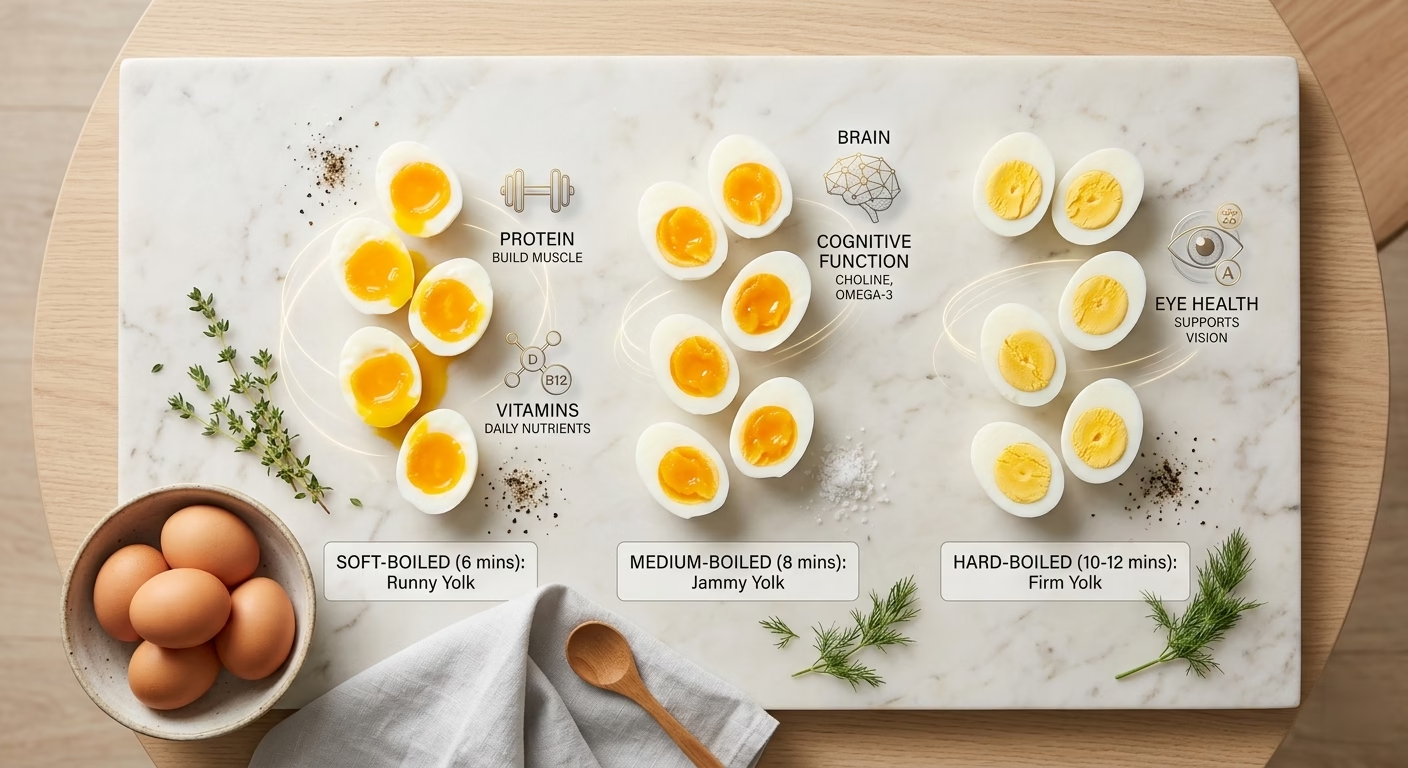
🧠 Egg Fact Highlights (Nutrition Breakdown)
Eggs are often called a “complete superfood” because they contain almost every essential nutrient required by the human body in a highly bioavailable form.
Eggs contain all essential amino acids
Egg protein is considered a complete protein because it provides all nine essential amino acids. These are crucial for muscle repair, tissue growth, hormone production, and overall body recovery. This makes eggs especially valuable for active individuals and those following a fitness-focused diet.
Yolk contains brain-boosting choline
The egg yolk is rich in choline, an important nutrient that supports brain development, memory function, and nervous system health. Choline also plays a role in liver function and helps in fat metabolism, making the yolk one of the most nutritionally powerful parts of the egg.
One egg has around 6–7g high-quality protein
A single boiled egg provides approximately 6 to 7 grams of high-quality protein. This protein is highly digestible and helps maintain muscle mass, supports recovery after exercise, and keeps you full for longer periods, making it useful for weight management diets.
Boiled eggs are low-calorie but highly filling
Despite being nutrient-dense, boiled eggs are relatively low in calories. This combination of high satiety and low calorie intake makes them an excellent food for controlling hunger, reducing unnecessary snacking, and supporting healthy weight loss.
Lutein & zeaxanthin support eye health
Egg yolks contain powerful antioxidants called lutein and zeaxanthin. These compounds help protect the eyes from harmful blue light exposure and reduce the risk of age-related vision problems. Regular egg consumption can contribute to long-term eye health.

FAQ – Boiled Eggs❓
Is it healthy to eat boiled eggs every day?
Yes, boiled eggs are highly nutritious and can be eaten daily in moderation. They provide protein, vitamins, and healthy fats that support overall health.
Which type of boiled egg is best for weight loss?
Medium and hard-boiled eggs are best for weight loss because they keep you full for longer and reduce unnecessary snacking.
What is the best time to eat boiled eggs?
Soft-boiled eggs are ideal for breakfast, while hard-boiled eggs work well for lunch, snacks, or post-workout meals.
Why does egg yolk turn green sometimes?
This happens due to overcooking. It is a reaction between sulfur and iron and is completely safe to eat.
Are soft-boiled eggs safe?
Yes, but they should be freshly cooked and handled properly. People with weak immunity should prefer fully cooked eggs.

📝 Conclusion
Boiled eggs are one of the simplest yet most powerful foods you can add to your daily diet. Whether you prefer them soft, medium, or hard-boiled, each variation offers a unique combination of taste, texture, and nutrition. By adjusting cooking time and temperature, you can easily customize eggs to match your health goals, whether it’s energy for the morning, steady fullness during the day, or protein-rich recovery after workouts.
Beyond convenience, eggs provide high-quality protein, essential vitamins, and important nutrients that support brain health, eye health, muscle strength, and overall well-being. The yolk and white together form a perfectly balanced food that suits almost every lifestyle.
Understanding how to cook and consume boiled eggs in the right way helps you get the maximum benefit from this natural superfood. With the right timing and preparation, eggs can become a consistent and valuable part of a healthy, balanced diet.
🍳 Want More Egg Recipes?
From quick breakfast ideas to protein-rich meals, discover more easy and healthy egg recipes on Pungu’s Kitchen.





You Might Also Like
Broth: The Unsung Hero of Your Kitchen
Broth, the humble liquid foundation of countless dishes, often gets overlooked. But...
The Kitchen is Never Too Small for Big Dreams: How Pungu’s Little Steps Inspire Big Things.
Join Pungu, our little chef, as they whip up a delicious omelet!...
Celebrating Prime Minister Narendra Modi’s Birthday with the Flavours of India
Prime Minister Narendra Modi, born on September 17, 1950, celebrates his birthday...
Top 7 Health Benefits of Sprouted Moong Beans🌱
Sprouted moong beans are a superfood packed with protein, fiber, and essential...
Vishu: Welcoming Prosperity, Light, and Flavors of Kerala
Celebrate Vishu with joy, tradition, and the rich flavors of Kerala! Discover...
The Silent Cries We Ignore: Why Every Grain of Food Matters.
Millions of children around the world face hunger every day while food...